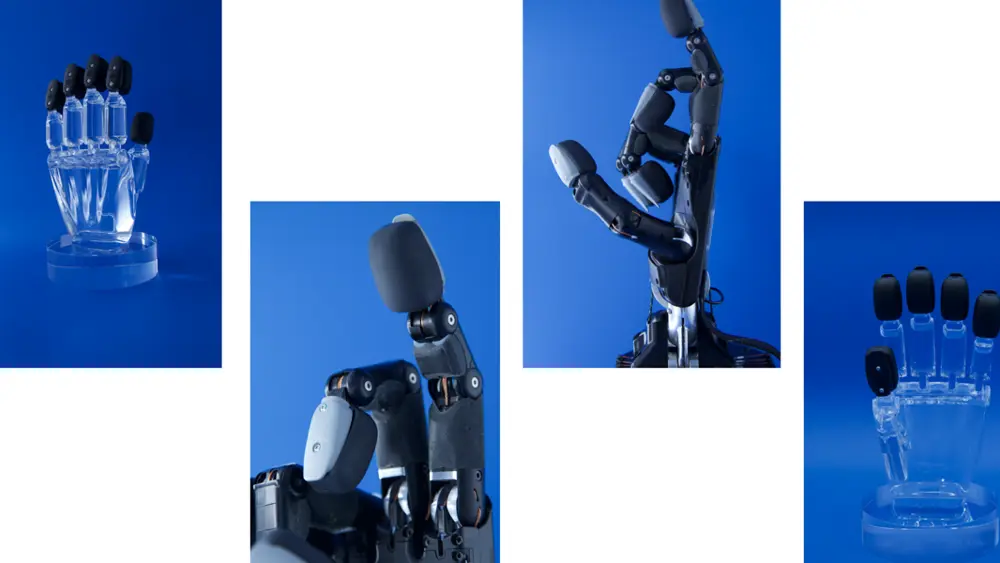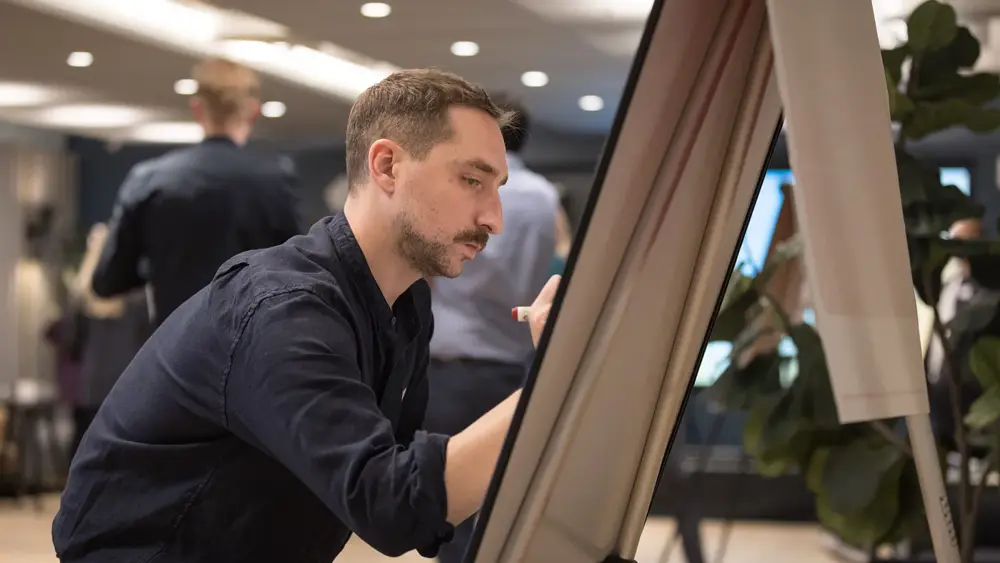
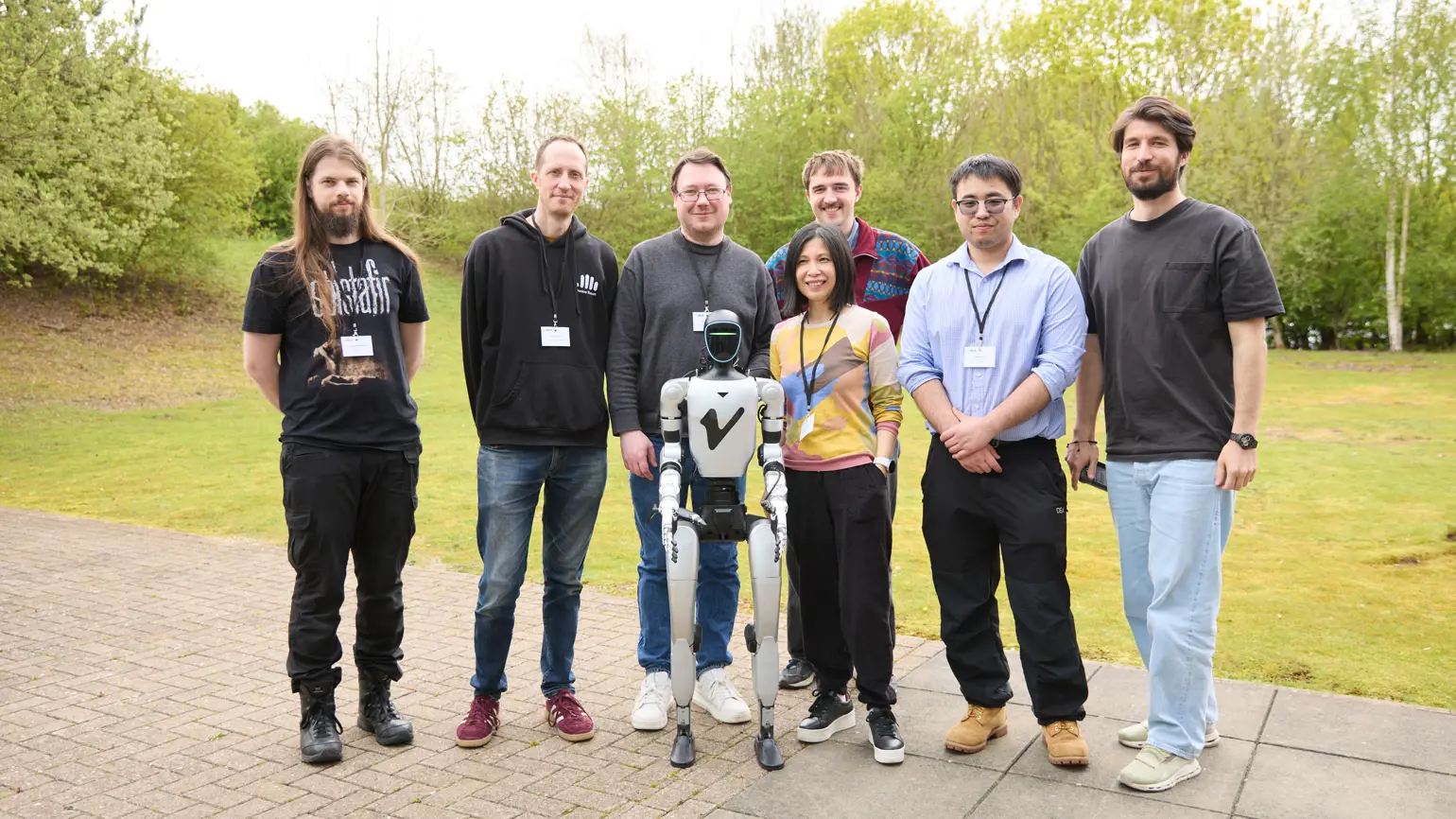
Smarter Robot Bodies recently marked one year since Creators on its Robot Dexterity programme began work. We celebrated this at our annual Creator Gathering, convening our community of funded teams across both the programme and opportunity seeds, with many projects demoing the latest from their labs.
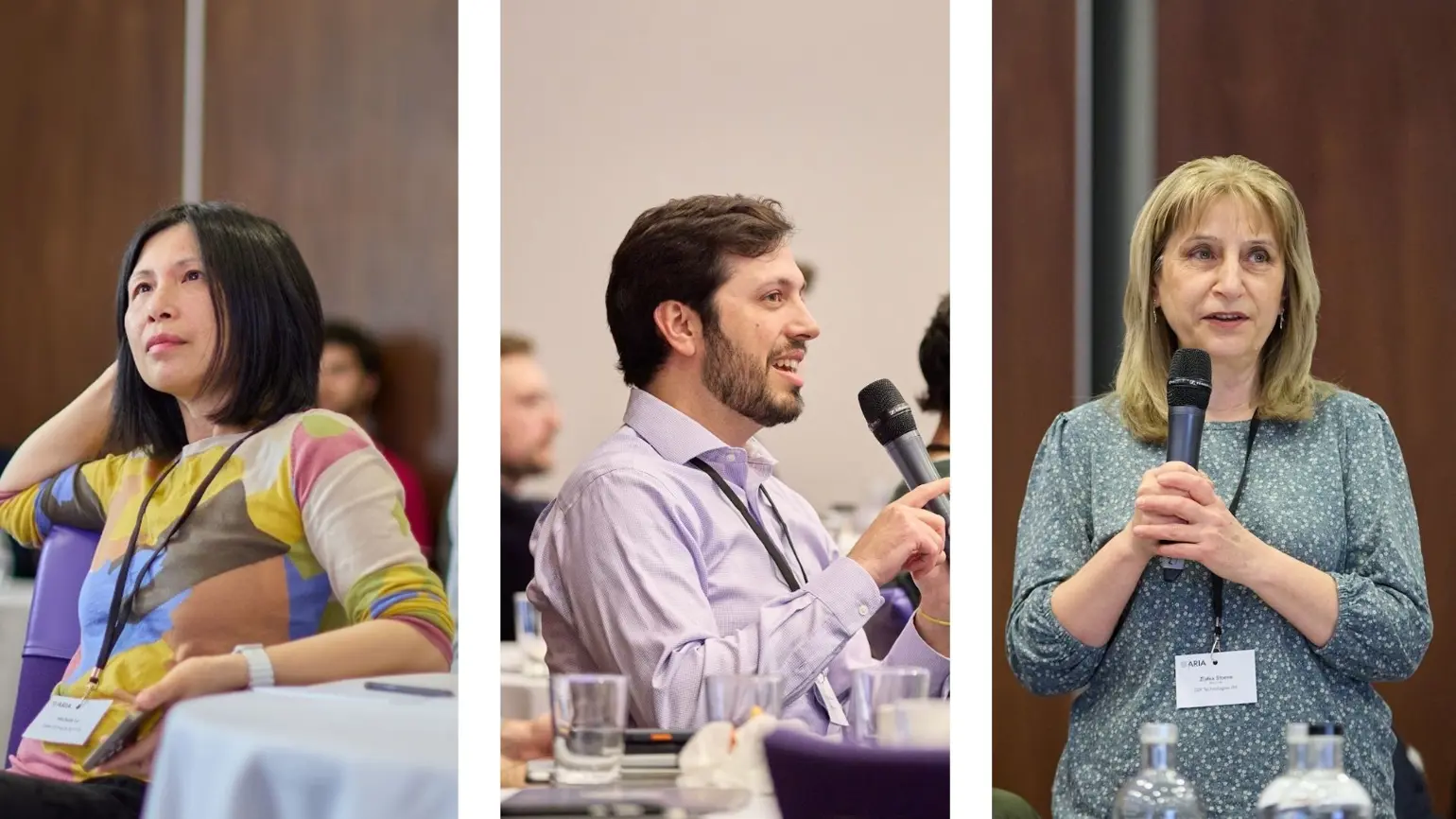
Michelle Lu, Nick Kellaris, and Zlatka Stoeva at ARIA’s Smarter Robot Bodies Creator Gathering
Zlatka, Nick, Michelle: what have you been working on over the past year?
Zlatka: We’re focused on enhancing tactile sensing in robots. DZP Technologies is a materials company, so we’re experts in new materials and building new sensors, so it’s been fulfilling to transfer our expertise to robotics. Our goal is to equip robots with tactile sensing akin to a human’s – essentially ensuring that robots can ‘feel’ the way a human can. In the last year, we’ve developed new materials, test rigs, data acquisition and analysis methodologies, and measurement and evaluation approaches. We can already see that we’re advancing the state-of-the-art quite significantly.
Nick: Artimus is working in partnership with the University of Bristol for our ARIA project. We’re aiming to develop and commercialise a new class of soft, artificial muscle called HASEL actuators. We use a combination of electrostatic and hydraulic forces to create very soft, resilient, high-force, silent actuators that we think can revolutionise robotics by creating a paradigm-shift from the electric motors that are widely used today.
"We’ve been able to demonstrate a 10x increase in the force output per weight of our actuators since the start of our project."
Michelle: At Vsim, we build simulation technology and software solutions for robotics to accelerate research, reduce costs, and drive innovation. In our ARIA-funded work, we’ve built an extremely fast and highly accurate simulation platform and created a machine learning framework for it.
We’ve been giving other Creators access to our platform, enabling multiple teams to more quickly and efficiently train their robots, essentially using AI to create next-generation dexterous manipulators.
"Where it previously took hours to train a robot to perform a task, our platform allows us to do it in a matter of minutes."
We’ve also integrated our standard actuators with a tendon-driven manipulator system with multiple degrees of freedom. Working with the team at Bristol, we’ve started creating the control and simulation framework, which means we can translate this into something that’s usable for real-world dexterous manipulation tasks.
What’s next for each of you?
Zlatka: We’ve already developed and tested multiple prototypes in the lab, so the next step is to put them in the hands of the user and test them in use-case scenarios. We’re also sharing our expertise on stretchable materials and conductive inks with other teams funded by the ARIA programme.
Nick: Having built a first dexterous manipulator using our artificial muscles, we want to drive further progress on the control and simulation framework with our collaborators at Bristol. We’re also working with ARIA Activation Partner Amodo Design to unblock some of the time-consuming manufacturing steps for the HASEL actuators.
Michelle: We’re already in the process of gathering feedback from other Creators on the Vsim platform, so we’ll be working with those teams directly to help them design and train their manipulators.
Radhika: Over the past year, we’ve observed a major issue around lack of efficiency in robot locomotion. Put simply, the energy and power that robots use to move around real-world environments is far higher than it needs to be – for example, a lot is wasted as heat – and this is a bottleneck for advancing robotics.
Jenny: That’s exactly right. We want to unlock robots that can move from A to B over rough, uneven ground, bump into things, not get damaged by stumbling over terrain, and do all of this more efficiently so that they can work for hours, rather than needing to frequently recharge or swap batteries.
"Ultimately, we feel passionate about building a next-generation robotics industry in the UK; as our society increasingly deploys robots, whether in construction or infrastructure maintenance, or recycling or caring for the environment, we want to have a homegrown industry that can meet those needs."
Jenny ReadProgramme Director, Smarter Robot Bodies