
Today we’re excited to introduce our five new Activation Partners.
Breakthrough R&D needs more than funding to become a real-world capability. It needs the right tools, infrastructure, technical expertise, networks and routes beyond the lab, often before a research team has proven every part of the science. Our new partners will deepen support in two areas where we see particular potential: using AI to accelerate research, and helping promising ideas take their next steps towards translation and commercialisation.
ARIA Deputy CEO, Pippy James, reflects on what we have learned from our founding partners, and why we are building on the model.
“ARIA exists to pursue breakthroughs at the edge of the possible. That means doing things differently."
It’s why we fund high-risk, high-reward R&D, knowing some of it will fail. It’s why we organise our multidisciplinary research teams, our Creators, around opportunity spaces focused on the outcomes we want to achieve, rather than disciplines.
And it’s why, two years ago, we created our Activation Partner model. The model brings world-leading organisations in to help our Creators move faster, tackle more challenging problems, and give promising breakthroughs the best chance of success.
Our founding partners have demonstrated what's possible. Activation Partners have given researchers access to specialist expertise and infrastructure they couldn't have developed alone, enabling them to overcome practical barriers that could otherwise have slowed or limited their work.
A great example is Sonalis, one of the Creator teams funded through our Precision Neurotechnologies programme. Sonalis is an Imperial College London spinout building a non-invasive brain interface that reads and influences brain activity using ultrasound and electric fields, to identify new ways to diagnose and treat conditions like epilepsy, Parkinson's and dementia.
As the research progressed, Sonalis needed increasingly specialised equipment it couldn't build in-house — the point where many academic spinouts stall. We paired the team early with engineering company Amodo Design, one of our Activation Partners. Amodo built the electronics and compute capacity Sonalis needed, moving its ultrasound imaging system from early-stage lab research to a working prototype. You can read more about what our founding partners have made possible across our research portfolio here.
The Activation Partner model also seeks to benefit the wider UK R&D community, extending beyond just our Creators.
Where we have identified gaps in the UK ecosystem that could hold back ambitious research, we have sought to bring in organisations that can help close them without crowding out what already exists, or help scale an existing critical capability at a pace that wouldn't happen without our involvement. For this new cohort, each Activation Partner has, or will establish, a dedicated UK presence, and all activity delivered through the partnership will take place here. Where an organisation does not already have a UK presence, ARIA funding is contingent on it establishing a UK entity at its own cost.
And we’re already seeing some of our founding Activation Partners take this approach further. Renaissance Philanthropy is scaling its Big if True Science Accelerator programme internationally, while the Pillar VC Encode fellowship attracted up to £5m in additional UK Government funding to expand the programme.
These lessons have shaped how we have curated our new Activation Partners.
The goal of the model remains the same. But this time, we've chosen to go deeper in two areas: AI in Science, and science translation.
Pranay Shah, Head of Special Projects at ARIA, explains why these two areas were chosen for this new set of Partners, and what he hopes the new partners will bring to ARIA's Creators.
“We chose these areas because we believe they’re ones where partnering with some of the world’s best organisations can give our Creators capabilities to increase the speed of scientific discovery and support the route of those discoveries from the bench to real-world applications."
The first is AI in Science. We're seeing advanced AI create new paradigms in how research is conducted, from allowing researchers to explore many more hypotheses to increasing the speed of experimentation and analysis, enabling researchers to tackle questions that would otherwise be out of reach.
Our work on AI Scientists has already helped us explore this potential, and these new partners build on that, bringing frontier AI expertise and infrastructure directly to our Creators.
The second is science translation, partnering with organisations who will support our Creators in taking scientific breakthroughs into real-world applications. For us, that means increasing not just the speed of high-quality breakthroughs, but accelerating the path to scalable impact. That requires thinking about what happens beyond the lab much earlier, connecting researchers with the translational expertise, infrastructure, industry relationships, and capital they need to take promising ideas further.
Our five new partners also reflect the diversity of ARIA's portfolio, spanning different types and sizes of organisations, from academic institutions and non-profits to world-leading startups.
Together, they build on our founding partners’ work by bringing complementary specialist expertise to ARIA, building momentum in the areas where we see the greatest potential for scientific progress.
Doing things differently means accepting that some of our research will fail. But even when an approach does not reach its original goal, it can leave behind useful knowledge, tools and capabilities that others can build on towards their own transformational breakthroughs – and what does succeed will be worth the bet alone. That is why I'm incredibly excited to see what our Creators and these partners will achieve together.
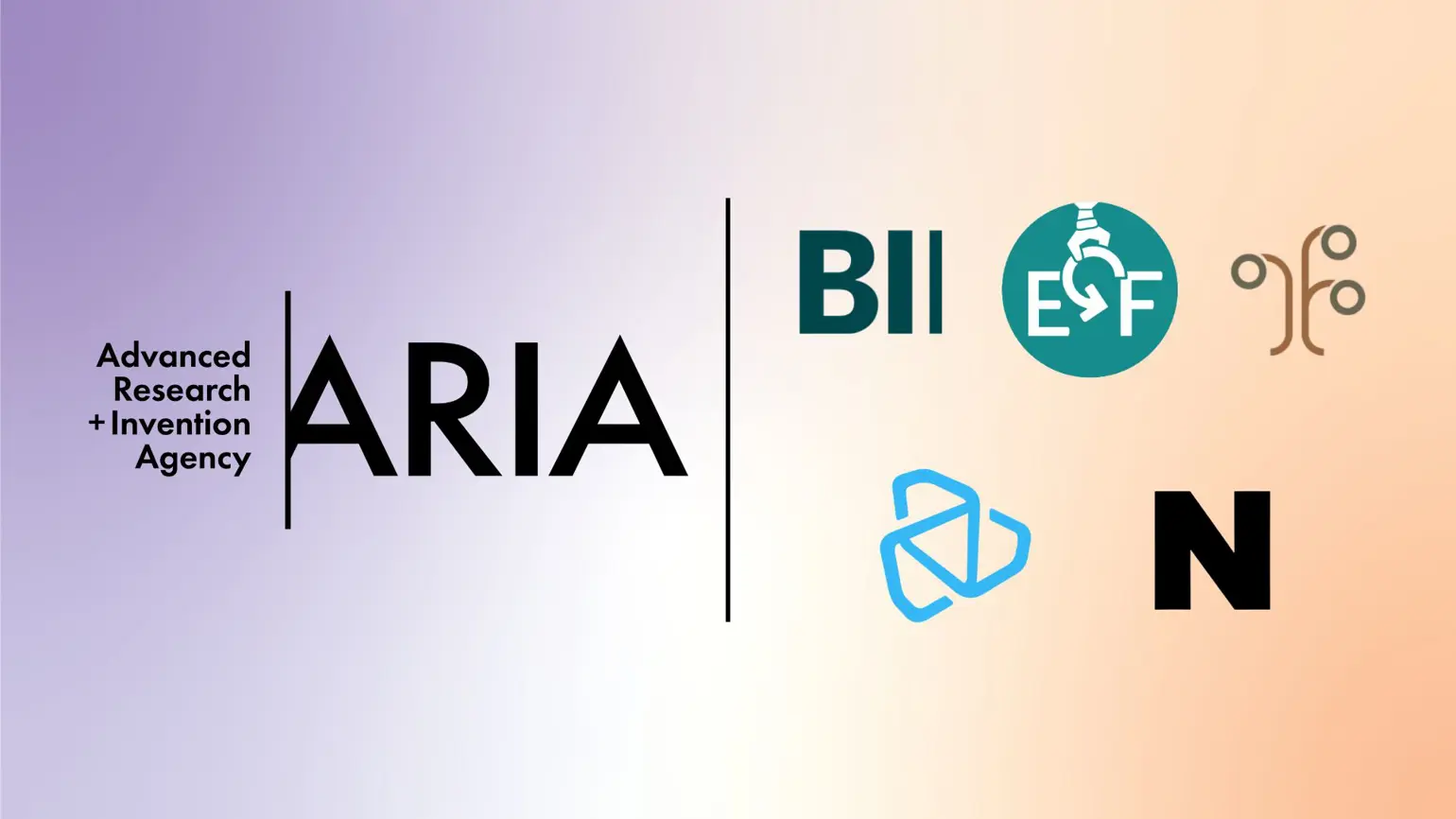
Here is more on the partners joining the ARIA ecosystem, and the capabilities they will bring:
Adaptyv Bio is an automated cloud lab that will build one of the first AI-native biology testbeds in the UK, giving ARIA’s Creators, and the UK ecosystem, access to automated, high throughput protein design, synthesis, and testing without having to build or run their own lab. Researchers developing new proteins to deliver therapeutics to the brain or recognise a broad range of viruses will be able to move from a computer-generated design to a real-world experimental result in weeks or even days.
Open Athena is a nonprofit that builds open, frontier computational tools for science. With ARIA, it will embed engineers directly within Creator teams, helping them harness large-scale compute for challenges from designing new proteins and understanding plant genetics to modelling the climate and discovering new materials. The models, code, and data it builds will be released openly, so researchers beyond ARIA can build on them too.
Edinburgh Genome Foundry is a world-leading centre for large-scale gene editing across diverse cell types. With ARIA, it will add AI-enabled capabilities to its automated engineering biology platform, helping Creators safely programme new functions into living organisms — from responding to viral infections and restoring brain function to producing sustainable futuristic materials. The partnership will also build lasting UK capability at the intersection of AI and biology.
BioInnovation Institute is an international life science incubator responsible for more than 130 startups that have attracted upwards of £850m in follow-on investment. Through our partnership, the Institute will bring its proven Acceleration Platform to ARIA, providing structured entrepreneurial training, venture-building support and translational knowledge to ARIA’s Creators and UK-based researchers and startups working across ARIA opportunity spaces. BII will run two dedicated entrepreneurship training tracks: the Explore track focused on academics looking to spin out their technologies and the Build track which will support incorporated startups.
NewLab is a venture platform that has scaled more than 300 hard-tech companies, collectively raising over £4.3bn in venture capital. With ARIA, it will build a UK translation platform connecting Creators who have made a discovery to the manufacturers, testbeds, industry partners, and investors needed to scale it. This will help hard-tech Creators, such as in ARIA’s Adaptive Machines, Nature-Inspired Computation, and Abundant Manufacturing opportunity spaces, move from prototype to real-world testing.
Related articles
One year of Activation Partners
Pranay Shah breaks down what we learned from our first cohort
Read more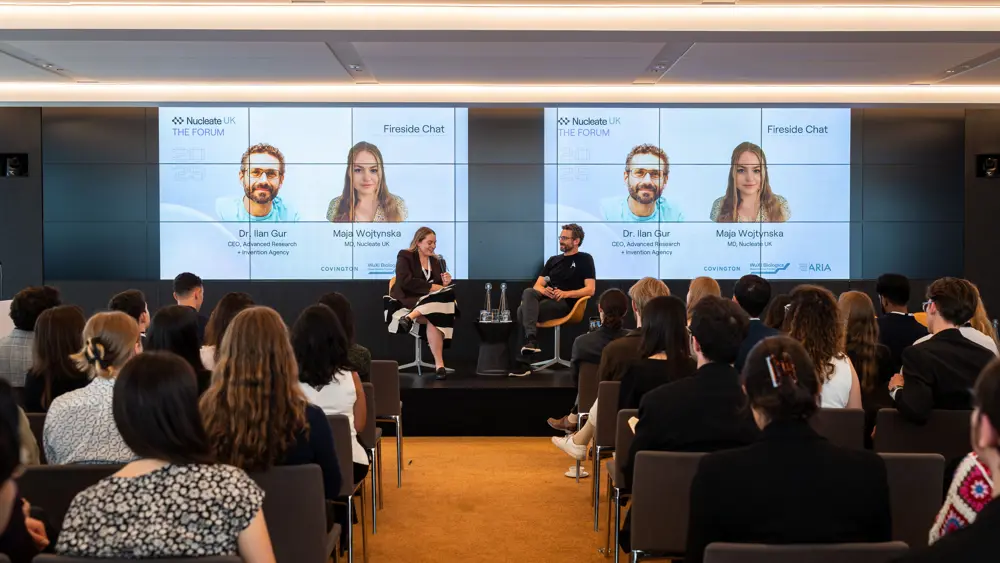
Seeding new AgTech ventures with Nucleate UK
Creating the conditions for bold ideas to thrive
Read more
Venture Café UK gathers momentum across the country
Venture Café is branching out around the UK
Read more