


Universal Fabricators
Backed by £50m, this programme sits within the Abundant Manufacturing opportunity space and aims to develop scalable processes that use proteins as the manufacturing tools to assemble advanced inorganic and composite materials.
Our goal
Biology proves that proteins are able to produce materials with almost any function using only abundant, locally available molecules. However, despite recent breakthroughs in protein engineering (AlphaFold, de novo design, directed evolution, non-canonicals, and cell-free synthesis), subsequent investment and applications of proteins is almost entirely limited to drugs and enzymes. We believe these are only a fraction of their socioeconomic potential. We’ve funded a new coalition of biologists, materials scientists, physicists, chemists, and engineers to develop scalable processes that use proteins to template the assembly of inorganic and composite materials with structures that currently cannot be mass manufactured. If successful, we’ll be able to use proteins to manufacture materials across electronics, energy, infrastructure and more — and proteins will become ‘universal fabricators’.
Programme structure
Protein engineering has made it possible to predict how a protein will fold, and to design proteins that have never existed in nature. But designing a single protein is not the same as making a material. We still cannot direct trillions of proteins, and the ions around them, to organise into a material we can see and hold. This is the 'Protein Assembly Problem', and it sits between molecular biology and industrial manufacturing. This programme exists to solve it — showing that protein-programmed manufacturing can combine molecular precision with reliable, industrial-scale production, a combination no current manufacturing process achieves.
More specifically, the programme has three linked objectives:
Solve the Protein Assembly Problem: build a programmable instruction set that directs proteins to organise into large, functional structures with different geometries.
Make state-of-the-art inorganic materials: use that capability to produce high-value inorganic or composite materials that outperforms what industry can mass-manufacture today
Make the process scalable: de-risk the robustness and volume needed to move protein-programmed manufacturing towards industrial production.
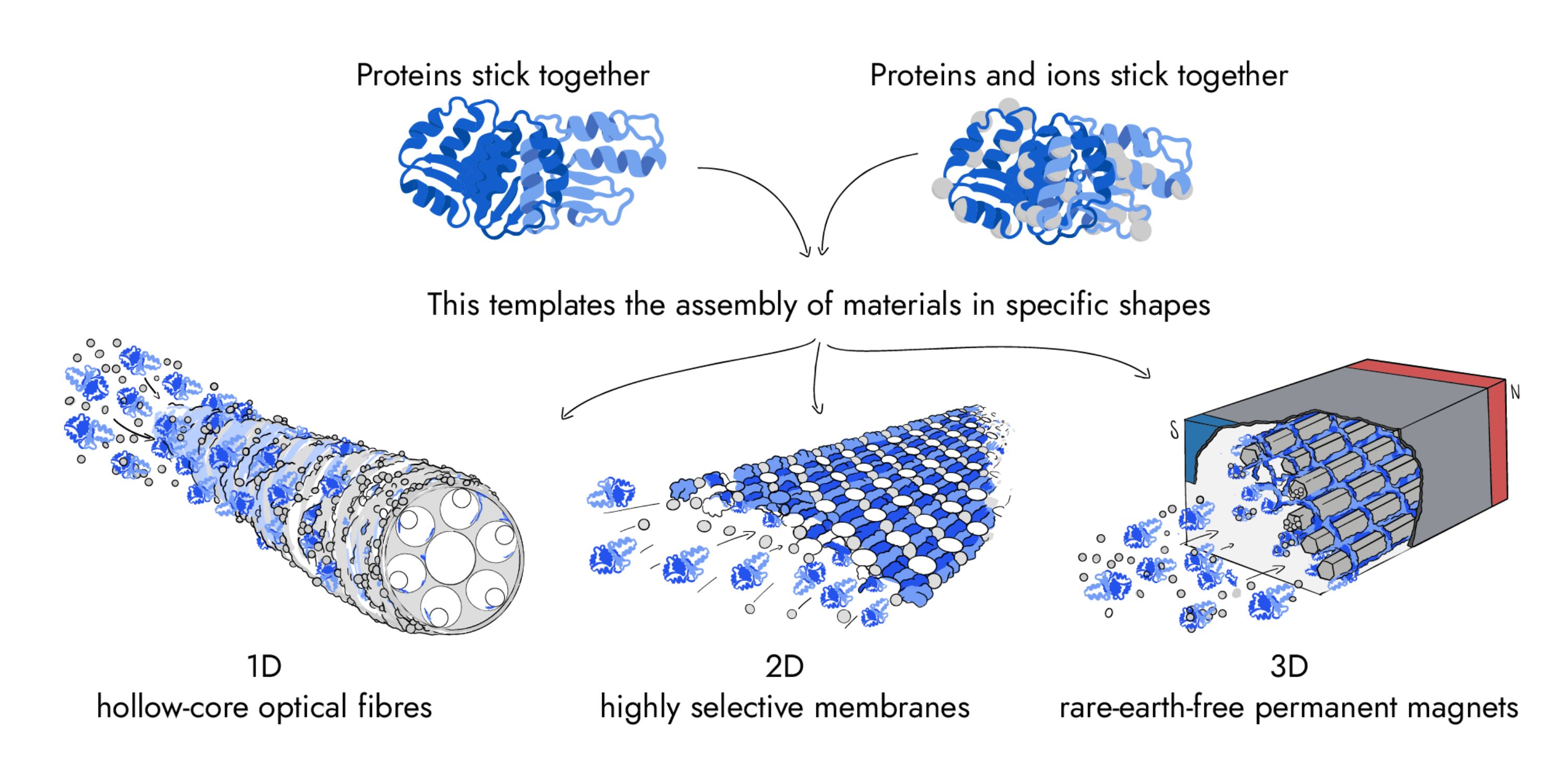
To achieve these objectives, the programme is split across two Technical Areas (TAs):
Protein-programmed materials manufacturing platforms
Focused on solving the engineering challenges that unlock programmable manufacturing platform technologies, and using them to produce state-of-the-art inorganic and composite materials.
Scaling
Building on results from TA1, teams will work with industry partners to scale their approaches to specific application demands.
Explore the funded projects
We're funding 11 teams of world-leading experts spanning a range of fields, from biology and materials science to physics and engineering. Together, they will take on the challenge of developing scalable processes that use proteins as the manufacturing tools to assemble advanced inorganic and composite materials — testing whether proteins could become ‘universal fabricators’.
Meet the programme team
Our Programme Directors are supported by a core team that provides a blend of operational coordination and highly specialised technical expertise.

Ivan Jayapurna
Programme Director
Ivan joined ARIA from the University of California, Berkeley, with a PhD in materials science and engineering. While studying, Ivan co-led several tech spinout efforts, was twice funded by the National Science Foundation I-Corps, and co-founded a technical consultancy for biotech startups.

Mariana Werner Sunderland
Programme Specialist
Prior to joining ARIA, Mariana delivered complex, cross-functional programmes across biotech and pharma. Her work portfolio includes driving diverse multidisciplinary research projects as part of both R&D/PD development pipelines and CMC implementation; as well as leading on the delivery of early access programmes for pharmaceuticals. Mariana supports ARIA as an operating partner from Pace.
José Videira
Science + Technology Lead
José has been working in deeptech startups since the age of 15, with a core interest in materials integration and manufacturing resilience. He spent 8 years in a startup he co-founded, taking a dual-use material technology from TRL 0 to 6, and driving the deployment of physics-based AI/ML into production lines. He has a PhD in solid state physics from Imperial College London.

Aayush Chadha
Frontier Specialist
Aayush works alongside the Programme Directors to scope out emerging areas of technology that can shape current and future ARIA programmes. He previously spent a year as a founder in residence at Entrepreneur First working on neuromodulation, materials for computing, batteries for electric aviation and stroke therapeutics. He also has a PhD in Nanosciences from the University of Manchester.
Featured insights
BBNs Toward Universal Fabricators
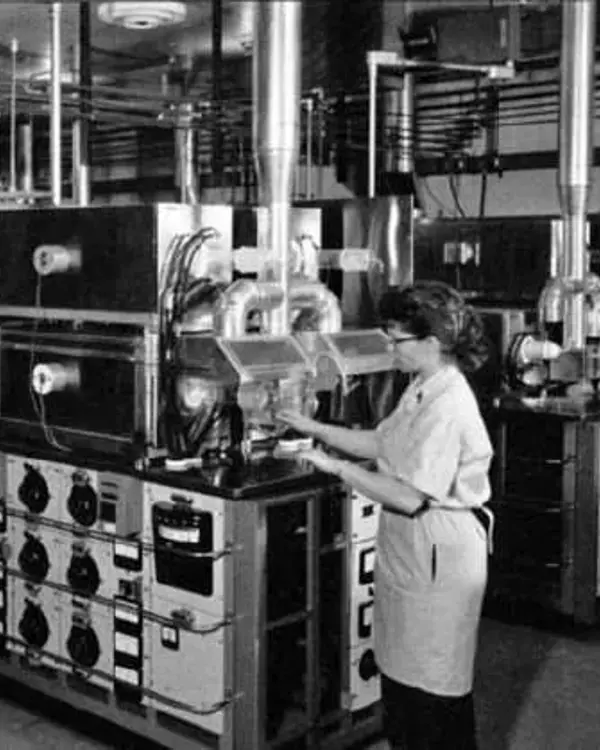
Ivan speaks with FreakTakes about the launch of Universal Fabricators and why BBNs (also known as FRCs) are a great fit for the programme.
Sign up for programme updates
Receive the latest updates from this programme, including funding opportunities, programme developments, events, activities and ways to get involved.