


Accelerated Adaptation
Backed by £54m, this programme sits within the Resilient Climate and Ecosystems opportunity space and seeks to explore pathways to accelerate the adaptation of wild species in order to prevent biodiversity loss and secure the natural infrastructure that underpins our global economy and well-being.
Responsible research
Any proposed intervention in nature raises profound ethical questions that cannot be resolved through technical excellence alone. It means working with living systems we only partly understand, and whose value people see in different ways. Working with them responsibly matters as much as the science. It also means starting from open questions rather than settled answers, including whether the new approaches explored in this programme are feasible at all; under what conditions, if any, they could be safe; and how they should be governed.
We are putting responsibility at the heart of this programme through a number of mechanisms, from strict guardrails and independent oversight to funding ethics research and conducting a UK-wide public dialogue.
Expanding the Conservation Toolkit
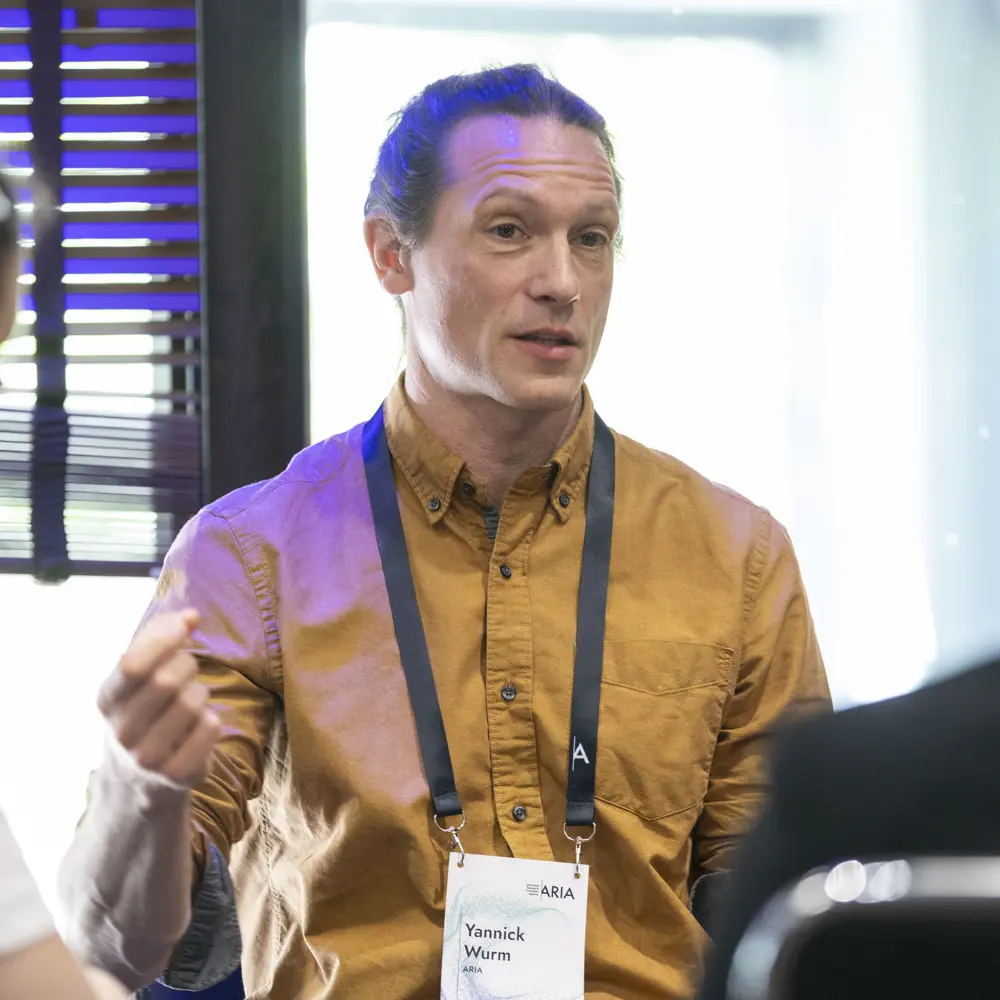
Programme Director Yannick Wurm didn’t originally believe that we should intervene in nature. Now he believes it’s vital that we explore pathways towards expanding the toolkit available to us.
Responsible by design
This programme has established guardrails to limit risk from the outset:
All interventions being explored within this programme's timeframe will only be tested in contained settings, allowing us to understand their feasibility whilst limiting risks to real-world environments.
No releases to the wild will occur during the programme funding period.
Ethical + Social Responsibility (ESR) Advisory Committee
This Committee, which is currently being formed, will provide advice and guidance to the Programme Director to support oversight of matters related to the ethical and social considerations of the programme and funded projects. This may include advising on, and reviewing, the outputs and significant milestones from Creators.
The role and remit of this committee will evolve to meet emerging ESR-related considerations of the programme.
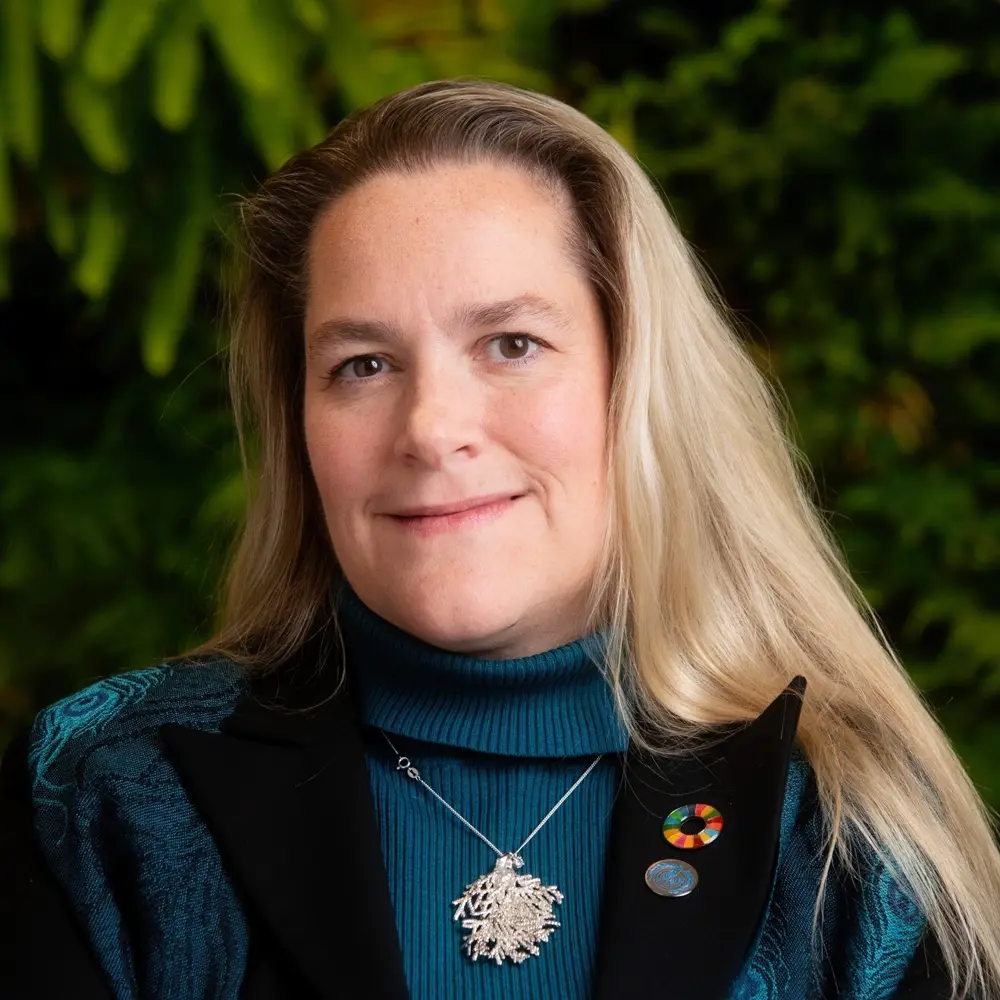
Marie-Claire Cordonier Segger
Committee Chair
Marie-Claire holds the Chair in Sustainable Development Law and Policy at the University of Cambridge and is senior director of the Centre for International Sustainable Development Law. She has over 20 years' experience advising UN treaty negotiations across more than 80 countries on climate, biodiversity and the Sustainable Development Goals (SDGs).
Funding research on whether and how
Every funded team is required to engage with the social and ethical dimensions of its work from the outset − and to take ownership of the ethical and governance thinking for its particular study system.
In addition, three of the programme’s five Technical Areas are funded specifically to keep the system-focused research validated, well-governed and clear-eyed about risk: an ethics and governance research team, a modelling team, and an independent data verification team.
MERGE: Modelling Evolutionary Resilience: from Genes to Ecosystems
Katie Willis, Imperial College London
Shared data infrastructure for climate biodiversity research
Terry Burke, University of Sheffield + Felix Shaw, Earlham Institute
Governing novel conservation and ecological engineering through plural value frames and systemic risk assessment
Marzia Briel, University of Reading + Alexandra Davey, Royal Botanic Garden Edinburgh
Request for Proposal: Public Dialogue Partner
We are partnering with Sciencewise, a government-funded programme specialising in public dialogues on science and technology, to run a UK-wide public dialogue on Accelerated Adaptation in Nature. The dialogue will explore public values and perspectives on the programme’s key research topics and questions.
We are currently seeking proposals from organisations with deep experience designing and delivering national public dialogues in complex areas to deliver this initiative.
Apply by 16 December 2026 (23:59 GMT)
Before this programme was formed, and continuously since, we have talked to the people who work on, depend on, regulate or would use the kinds of tools it might produce. Hundreds of conversations and more than fifteen workshops, with conservation organisations, government departments, land managers, and researchers across ecology, evolution, biological engineering, conservation, ethics, robotics and AI, shaped our understanding of what is needed, what is feasible, and where the limits lie.
We also funded 22 short discovery projects (November 2025 to January 2026) to test directions across the space. Several looked directly at the ethical, social, governance, policy and risk questions rather than at the technology:
Their findings, alongside those of the projects on research directions and technical feasibility, informed how this programme was designed.
The listening has not stopped. We continue to talk to stakeholders of every kind as the work develops, and if you would like to be part of that, whether you work in a conservation organisation, a government department, on the land, or in research, get in touch.
Get in touch
Related work
The Accelerated Adaptation programme is just one area of work we’re funding on the theme of engineering ecosystem resilience, with complementary work that includes smaller projects exploring other research directions and an organisation focused on quantifying the natural world.
Opportunity seeds
Discover the opportunity seeds funded by Programme Director Yannick Wurm, with projects exploring topics that range from advanced ecosystem sensing and nature-based interventions to autonomous robotics and molecular tools for conservation.
Echo Labs
A Focused Research Organisation (FRO) formed through Convergent Research’s UK FRO Founder Residency, Echo Labs is building the scientific infrastructure to represent the natural world − making ecosystem conditions measurable enough to model, compare and forecast as a dynamic, quantifiable property.