Re-thickening Arctic Sea Ice (RASI)
The Arctic is warming much faster than the global average, driving sea ice loss that threatens local ecosystems and accelerates global climate change.
While the only sustainable, long-term way to slow Arctic warming is through emissions reductions, the speed of Arctic warming has led to suggestions that deliberately thickening sea ice during winter might help to slow the melting and the rate of sea ice loss.
By bridging the gap between theoretical models, laboratory studies and real-world data collected through small-scale outdoor experiments, this project will investigate whether this approach could ever be feasible, scalable, and ecologically sound.
Overview
Led by Shaun Fitzgerald at the Centre for Climate Repair (University of Cambridge), the RASI project is supported by a £9.9m grant over 42 months. The consortium unites specialised field teams — Real Ice and Arctic Reflections — with a global network of research partners including the University of Manchester, UCL, the University of Washington, and NERSC, to combine rigorous scientific modelling with real-world Arctic experimentation.
Two separate sub-teams of researchers (Real Ice, Arctic Reflections) will conduct controlled, small-scale experiments in two locations in Canada. These experiments have been designed in close collaboration with local communities and in compliance with ARIA's stringent governance framework. The goal is to gather essential real-world data to rigorously assess if this intervention warrants further consideration.
Methodology
The outdoor experiments will take place in Nunavut, Canada, across three winter seasons (2026 to 2028). Using both above-ice and submersible pumps, the team will try to create thickened ice patches by pumping seawater from beneath existing ice and spreading it on top, where the frigid air freezes it quickly. Over the course of the project – and only if the early experiments suggest the approach is ecologically sound – later experiments will aim to cover areas up to 1 km² per experiment site. In the process, the RASI team will generate real-world data on variables that theory cannot yet predict – including whether this thicker ice lasts longer into the summer, how ice movement might be affected, and what the local ecological impacts of thickening might be.
In parallel, the RASI teams will look to reduce uncertainty around efficiency and scale. Data from outdoor experiments will feed into computer models to simulate interventions at scales that are not being physically tested. The RASI teams will model targeted interventions at natural choke points such as the Nares Strait – specifically, thickening ice arches. The goal is to understand if strengthening these specific areas could slow the flow of ice from the Arctic Sea into the warmer Atlantic, which is happening earlier and earlier in the year as the Arctic warms.
By collecting ice cores and water samples for study, the teams will look to improve our current understanding of whether sea ice thickening is ecologically sound. This real world environmental data will contribute to the wider programme, as scientists working on ecological modelling will then be able to simulate any ripple effects on the marine ecosystem, ensuring that the ecological cost-benefit analysis is understood before any large-scale activity is ever considered.
Research
The first phase of ARIA funded outdoor research begins in early 2026 at two locations in Nunavut, Canada. In both locations, the teams have secured Free, Prior and Informed Consent from the communities where this research will take place, ensuring engagement is meaningful, respectful and continuous. The researchers have secured the support and cooperation of municipal authorities, local Elders, and Hunters and Trappers Organizations (HTOs). Local residents have not only provided input into the experimental design but will also work alongside the researchers as part of the team.
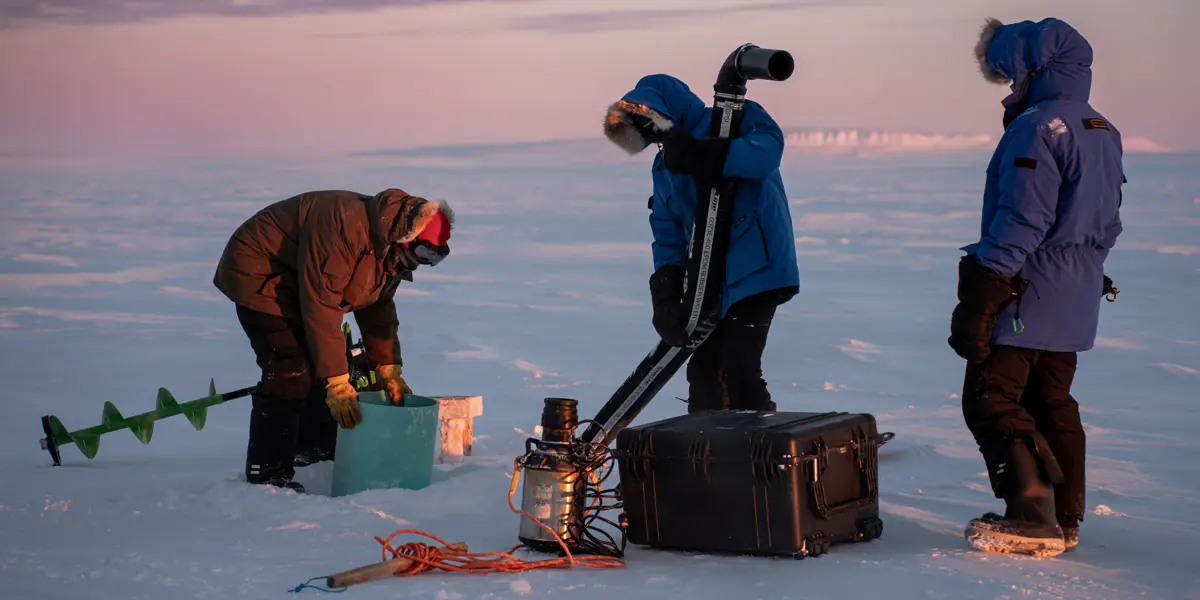
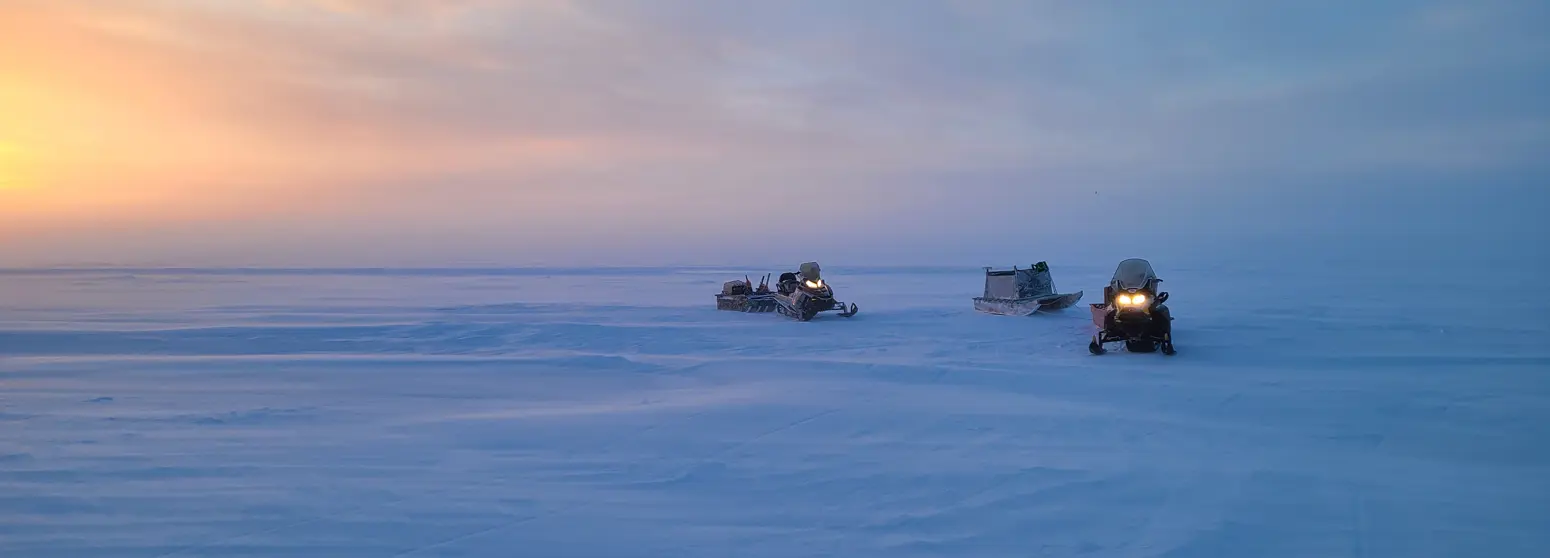
Real Ice team members in Cambridge Bay, Winter 2024-25, courtesy of Elise Imbeau
In Cambridge Bay, Nunavut, the Real Ice sub-team will commence work in mid-January. Building on two years of engagement with local residents, and subsequent iterations of the experimental design, the team has been granted their formal permit to operate. The experiment site, located ~7km from the hamlet, was selected together with the Ekaluktutiak HTO, and their members will take part in the project.
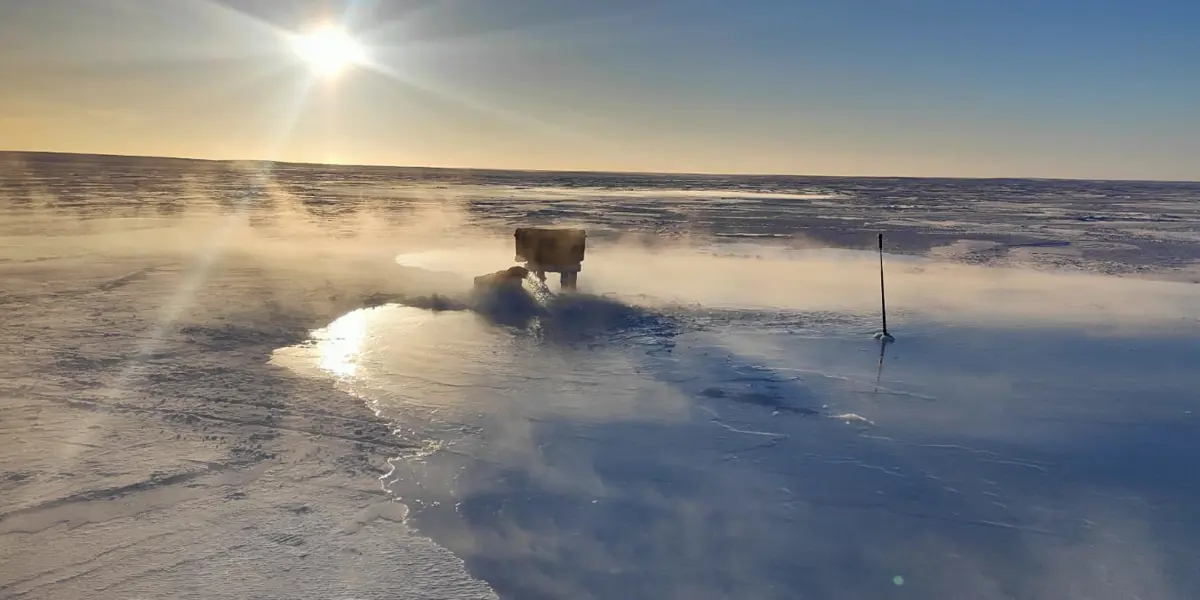
Real Ice research site in Cambridge Bay, Winter 2024-25, courtesy of Centre for Climate Repair
In Qikiqtarjuaq, the Arctic Reflections sub-team will commence work in early February. They have the support of key local stakeholders and have been granted the formal permit to operate. Following a pivotal consultation with the local community in September 2025, the team moved their proposed experiment site to a new location to avoid disturbing seal birthing areas, acting directly on the advice of local Elders and the Hunters & Trappers Organization.
Resources
Our goal is to build the open scientific knowledge base the world needs to make better informed decisions.
We’re committed to responsible stewardship, transparency, accountability + meaningful community engagement. Find out more about our governance principles, the programme’s independent Oversight Committee, and the process by which outdoor experiments are scrutinised.
January 2026: Project update
Programme Director Mark Symes explains why we're funding outdoor research to gather critical data on the safety and feasibility of sea ice thickening.
Read more
In the Arctic in winter, the air is generally much colder than the sea. As sea ice forms, it tends to grow from underneath, as sea water freezes onto the underside of a sea ice floe. However, ice is also a good insulator of heat, which means that the thicker the ice, the slower the rate at which new ice forms, as the ice itself insulates the water underneath it from the cold air above.
In sea ice thickening, water is pumped from underneath the ice and is allowed to spread out on top. The water freezes faster now that it is in direct contact with the cold air as well as removing the insulating snow layer that sits on top of the ice. This makes the ice thicker from above, rather than below. This is the same method that is used to make ice roads, but now applied for thickening sea ice more generally.
We know that the general concept of sea ice thickening works from ice roads and work that the team has previously performed (before they received ARIA funding). The goal of these new experiments is to gain greater confidence on the properties of the new ice that is formed: how strong it is, how salty it is, how fast it melts and are there any effects on microbes in the ice or in the water from the pumping process?
This is actually one of the key questions that the RASi project aims to address. If the air temperature is cold enough, then the net effect should be for the sea water that is pumped on top of the ice to freeze and thicken the ice, rather than melting it. This is why pumping water on top of the ice has to happen in winter when the air temperature is sufficiently cold. At these cold temperatures, as the sea water freezes, salt is expelled from the ice. This salt forms a concentrated salt solution called “brine” that usually drains through the ice into the sea. However, it could be possible for this brine to pool on the surface of the ice, which (as the seasons progress and temperatures rise) could lower the ice’s melting point and cause the ice to melt faster in the summer. Data from previous years suggests that the thickened ice has salinity levels within "normal" bounds, with the effect that the thickened ice did indeed survive for longer into summer. However, more research is required to gain greater certainty on this and a better understanding of how the thickened ice behaves.
The project is called “Re-thickening Arctic Sea Ice” or RASi for short, and it is being led by Dr Shaun Fitzgerald of the University of Cambridge. There are a number of collaborators on the team from around the world. The two main sub-teams actually out on the ice doing the thickening experiments are Real Ice and Arctic Reflections. Real Ice and Arctic Reflections are private companies, sub-contracted to the University of Cambridge to carry out fundamental science research, and they are both deeply committed to transparent and ethical science. Through their involvement with this programme they are signatories of the IP pledge, which commits them to make their findings freely available for research purposes, and they are aligned with the governance principles set by this programme. Real Ice and Arctic Reflections will work closely with the local communities in both locations, employing local hunters as guides and co-researchers.
The experiments will happen in two locations in Nunavut in northern Canada. Real Ice will work in Cambridge Bay (starting in January 2026) and Arctic Reflections will work in Qikiqtarjuaq in Nunavut (starting in February 2026). The ice thickening will be complete in March, and then the teams will continue to monitor the ice through until May/June when it will have completely melted. The two locations were chosen as they both have workshop facilities where equipment can be repaired, they have suitable sheltered areas where ice thickening can be tried safely and because the local communities in both locations were supportive of the research.
The involvement of local communities is central to the field research that will happen. In both locations, the experiment sites have been chosen through consultation with the local community in order to avoid disturbing wildlife and to make sure that the site is suitable for ice thickening. Local hunters take part in the experiments as guides and active participants in the research as they know the ice, the wildlife and the area better than anyone else.
The experiments will all be small scale (less than 1 square kilometre in size) and have been designed to have as little impact as possible on the local environment and wildlife. The teams must dispose of all their waste responsibly in town (not on the ice) and they will only work during daylight hours to avoid disturbing wildlife. Travel to and from the test sites will be by the same route to minimise disruption. The sites were selected through consultation with the local community in order to avoid disturbing wildlife (especially seals). Any impacts on wildlife will be monitored and samples of water and ice from thickened and unthickened areas will be compared to check for any effects on microbial life.
The experiments will all take place under permits from the Nunavut Research Institute. Anyone conducting research on health, social sciences, or the natural/physical sciences in Nunavut must first obtain a licence from the Nunavut Research Institute. Nunavut has a joined-up licensing system for research that ensures that the research is ethical, responsible, and includes appropriate community engagement. This includes assessment of the potential environmental and socio-economic impacts of the research and the incorporation of traditional knowledge.
The experiments will be conducted with the consent and active participation of members of the local community in both locations.
ARIA also has its own internal processes for agreeing to fund outdoor research. Teams must submit details of their experiments, their community engagement to date and plans for future community involvement to the programme’s independent Oversight Committee, who scrutinise these and make a recommendation to ARIA’s CEO on whether or not a particular set of experiments should be funded. ARIA’s CEO then makes a decision on whether or not to fund the experiment by considering the team’s permits, and the Oversight Committee’s recommendations.
The experiments will all take place under permits from the Nunavut Research Institute. Anyone conducting research on health, social sciences, or the natural/physical sciences in Nunavut must first obtain a licence from the Nunavut Research Institute. Nunavut has a joined-up licensing system for research that ensures that the research is ethical, responsible, and includes appropriate community engagement. This includes assessment of the potential environmental and socio-economic impacts of the research and the incorporation of traditional knowledge.
As part of their licence application processes, the team was required to show how they would minimize risks to the environment and the research team, and generally make the experiments as safe as possible. The Nunavut Research Institute licence and ARIA’s own engagement criteria also require wide consultation with the local community, including offering opportunities for the community to have a say in the design of the experiments, to make sure that they are conducted ethically and responsibly. You can read the permits and details of community engagement here.
Results on the experiments will be reported back to the local communities in Nunavut on a regular basis. More formal descriptions of the results suitable for scientific publications will be made available in due course, likely towards the end of 2026. Any scientific publications will be open-access, meaning that anyone will be able to access and read them.
These experiments will all be small scale (less than 1 square kilometre in size) and are designed to gain knowledge as to what thickened ice is like, how long it takes to melt and what the ecological implications of sea ice thickening might be. They are being conducted by teams of scientists, engineers, ecologists and local hunters who want to find out as much as they can about sea ice thickening and its effects. They might find ways to make sea ice thickening more effective, but equally they might discover reasons why sea ice thickening would be a bad idea. This is all useful information that can help guide decision making as to whether larger scale sea ice thickening would be sound.
Deployment would be the long-duration, large-scale thickening of sea ice with the intention of keeping entire regions frozen for longer periods of time. The RASi project won’t be looking at deployment as that could only ever come if research showed that the benefits of thickening outweighed the downsides, and once proper governance of such large-scale thickening was in place.
The RASi team will compare thickened and unthickened areas and will measure ice thickness, how salty the ice is (and what the salinity gradient across the new ice is, and how this changes with time), ice temperatures and the reflectivity of the ice. They will also analyse water and ice samples from thickened and unthickened regions to see if the thickening process has affected microbial life.
Arctic sea ice is white and highly reflective; snow-covered sea ice can reflect as much as 90% of the light that hits it. In contrast, if the sea ice melts, then the dark ocean it exposes can absorb 90% or more of the light that hits it. Rapidly melting Arctic sea ice can set up a vicious circle, where as ice melts it exposes more dark ocean, which absorbs more light and gets warmer, in turn melting more ice.
A stable Arctic ice cap acts like a big mirror, reflecting a lot of sunlight straight back out to space and keeping the Arctic cool. This in turn has a strong influence on weather patterns across the globe. An ice-free Arctic would lead to more heat being absorbed in the Arctic, which would have significant implications for the weather and climate, especially in the Northern Hemisphere.
Much of the traditional way of life of the Inuit people depends on sea ice. Sea ice provides a vital platform for accessing the marine mammals and fish which form a major component of the Inuit diet. The timing and condition of the ice are critical for successful hunting, and traditional knowledge of ice behaviour allows hunters to safely pursue food resources. Sea ice also serves as the primary travel "highway" in the winter, connecting communities and hunting areas that are otherwise separated by open water or impassable terrain.
The intimate association with the frozen environment is at the centre of Inuit culture, education, and identity, passed down through generations. Activities on the ice, such as hunting, storytelling, and building snow houses (igloos) for ceremonial purposes, provide a deep spiritual connection with Inuit ancestral lands and the natural world.
No. The only sustainable solution to anthropogenic climate change is through reducing emissions of greenhouse gases and removing excess carbon dioxide from the atmosphere. Sea ice thickening remains experimental at anything larger than the small scale, and a lot of research is required to show if it could ever be feasible, scalable, safe or governable at larger scale. These are some of the questions that the RASi project hopes to address. But, even if sea ice thickening is all of these things, it will at best only ever be a sticking plaster to delay loss of the sea ice, and not a solution for climate change. If rapid emissions cuts are not made soon, then no amount of thickening will be able to prevent the Arctic from becoming ice-free.
The RASi project is only looking at the small research scale (less than 1 square kilometre in size) to answer key questions on the feasibility and ecological soundness of sea ice thickening. ARIA has no plans to scale these experiments up at the current time. Any future larger-scale thickening would have to build on the results of the RASi project and would require governance and guardrails appropriate to the proposed scale of the thickening.
Computer models do exist that can give some idea of what the impacts of larger-scale thickening might be, but these models are not accurate enough to base decisions on at the moment. Some members of the wider RASi team will be working to improve these models. The small scale experiments that the other RASi team members will perform will help to provide data to make these models more accurate, as well as showing up new information that should be included in future models in order to make them better representations of reality.
Exploring Climate Cooling
This programme aims to build a robust evidence base to explore – with independent oversight – if climate cooling approaches could ever be feasible, scalable, safe, and governable
Funded projects
In Exploring Climate Cooling, we're funding 22 research teams uniting specialists across diverse disciplines

